Behind the scenes: Woodland management during the winter months
When you think about forestry work over the cold and dormant winter months, the first thing that most likely comes to mind is tree planting. However, there is an abundance of jobs to get stuck into during this time without having to reach for our trusty spades, which are arguably more important than tree planting itself!
Much of the work the forestry team carries out over winter is done with the aim of helping to improve the health and resilience of our trees and woodlands in the long term, while also aiming to improve the biodiversity of flora and fauna. Tree planting is vital for increasing woodland cover in the UK, but woodland management is crucial in making sure those woodlands grow into mature and stable ecosystems that can function on their own. All this work will help us achieve our aim of creating a healthy, contiguous native woodland and improve nature connectivity.
Managing the Forest in winter
Many of the forest management tasks we carry out mimic natural processes that benefit woodland habitats. So, when looking after the array of habitats we have in the Forest, it is important that we prioritise the right management work for each site to maximise the healthy development of our woodlands.
The charity is passionate about balancing both conservation and connecting people with nature. The job of Forest Rangers is to create and enhance our natural spaces, but also to provide a safe environment for people to enjoy spending time in the Forest.
Tree safety maintenance and management
The forestry team is consistently managing the risk of falling trees or branches across our public access trails. To ensure our woodlands are safe places to work and visit, silvicultural work (the care and cultivation of trees) with a conservation-approach is carried out. This work includes felling, thinning, pruning, pollarding, coppicing, and removing dead, diseased or damaged wood where it may be dangerous. We also regularly inspect our footpaths and roadsides for hazardous trees. This is especially important following winds and heavy rainfall, so we can quickly identify and action any tree safety work.
Winter is the ideal time for felling and pruning because trees enter a dormancy period, so will retain their energy even if limbs are removed (promoting growth in spring). Furthermore, winter is outside of the main bird nesting season and reduced leaf cover improves ease of access, visibility, and the processing of material (creating brash habitat piles, deadwood hedges and log stacks).
By continuing the care of our trees, we are protecting our future. Sustaining healthy woodlands and hedgerows is vital to the charity’s conservation efforts.
Coppicing
Coppicing is renowned as an ancient woodland management method, but to this day we still undertake coppicing because of the benefits it has to our woodlands, wildlife, and the environment.
It is a pruning method where a tree is cut back to a stool (a stump just above ground level), encouraging regrowth from dormant buds at the base. This results in the production of multiple new stems.
Coppicing simulates the natural process of retrenching (shedding branches to extend their lifespan). It is commonly practiced in cycles with the aims of rejuvenating the trees by extending lifespan, opening the canopy to increase light reaching the forest floor, providing variable habitats in open glades, and producing sustainable timber products.
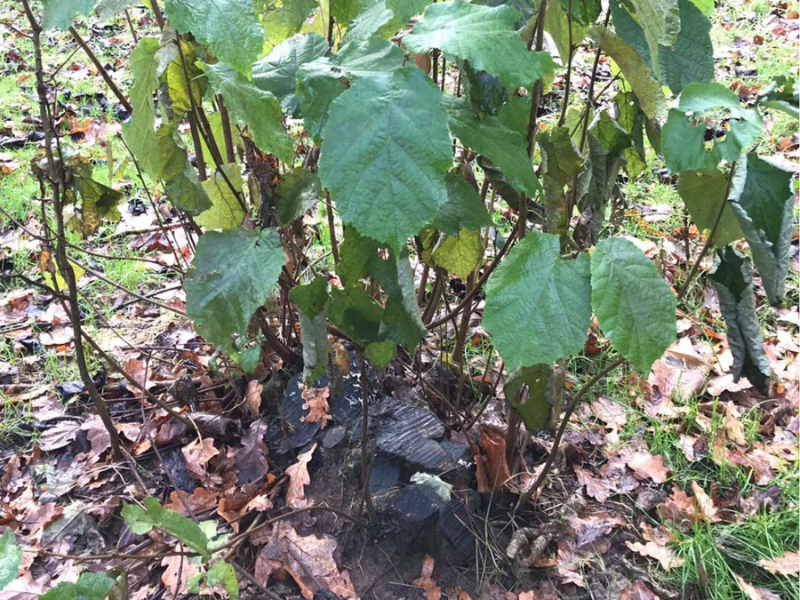
An important part of winter work is the management of our more established woodlands through coppicing and thinning. There are many coppice plots of different ages throughout the Heart of England Forest, typically of hazel trees, which can be coppiced every seven to 15 years, and are incorporated into our winter work plan. This season around the Dorsington area we have started coppicing hazel plots in Giddings Wood, Eddie’s Wood, and Roman Fields Wood, all of which have reached the appropriate age and size for their first cut.
Our coppicing plans ensure to rotate coppice areas (to avoid cutting blocks directly next to each other) to create a chequerboard effect and give structural diversity to the woodland. Most of our native hardwood trees are suitable for coppicing. Some of the commonly coppiced tree species include hazel, ash, sweet chestnut, lime, oak, alder, and willow.
What happens to the cut wood?
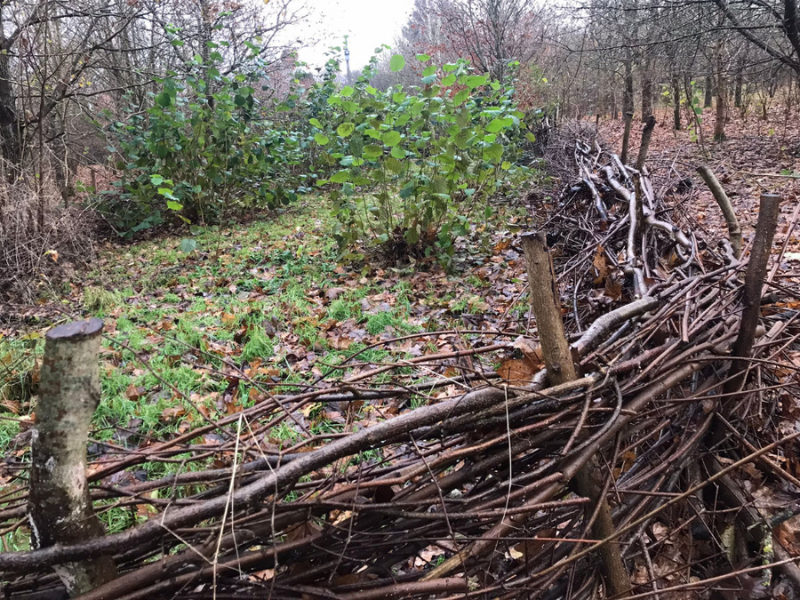
Hazel is fantastic for growing useful products: hedgerow stakes (two-inch thick straight poles for hedge laying or hurdle uprights), binders (one-inch thick young supple shoots for weaving hurdles), and beanpoles (less than one-inch diameter straight poles for gardening supports). Coppiced products can also be used to create deadwood habitat piles and sustainable firewood. Brittle growth and knotty tops of cut hazel is used as brash (a term which describes any offcut twigs or branches that have no production value) to cover and protect coppice stools and for building dead hedge coups to deter deer from grazing the new shoots.
The forestry team has built several hurdles from our coppiced products - wildlife screens for wetland bird surveying, shelters to protect pond habitats, and barriers to redirect foot traffic back onto waymarked paths. Pieces suitable for firewood are split, seasoned, and donated to the outdoor learning team for their campfires, so nothing goes to waste!
Pollarding
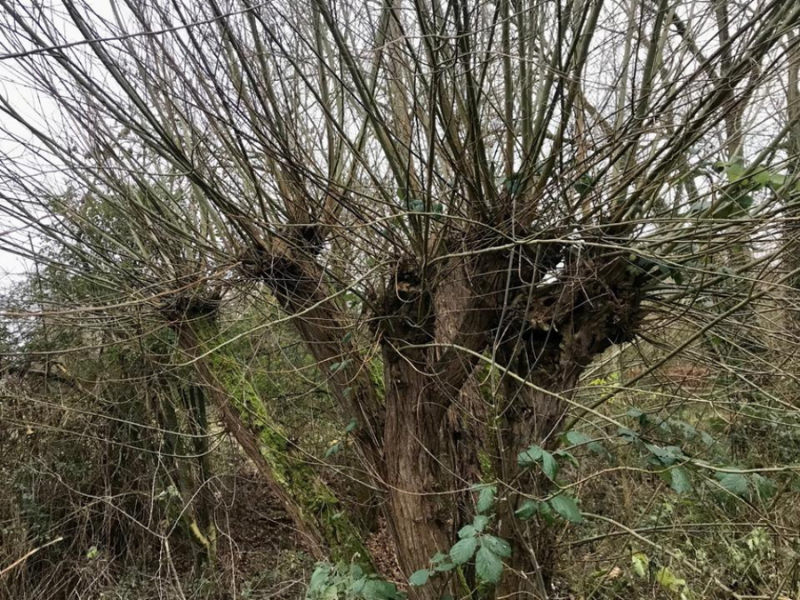
Pollarding involves removing the upper branches of a tree back to the main stem, encouraging new shoots to grow from dormant buds below the cut. It is a similar method to coppicing but is done at height. Young and mature trees can be pollarded in woodlands and open areas, including very large specimens, sometimes leaving a standing stem over five metres high. Pollarding can be carried out for several reasons, including reducing tree height and spread, improving light conditions within woodland, restricting growth in confined or formal settings, and encouraging the production of young shoots. There is no fixed pollarding height. It is sometimes referred to as copparding, a practice intermediate between coppicing and pollarding, where trees are cut at a lower height but above the browse line.
Thinning
Thinning of woodlands - selective felling of poor or substandard trees to allow better examples to thrive and mature - is an important management technique. Thinning woodlands mimics the natural process in woodlands, where dead and damaged trees fall (due to disease, age, weather, or interaction with animals) and creates open spaces within woodlands. These natural processes are less prevalent in many of our young woodlands because the trees are often of a uniform age, lacking deadwood from mature trees, and there is an absence of grazing mammals to disturb the woodland and create varied habitats.
Our Forest Rangers follow a management plan which mimics these processes by:
-
Cutting selected trees to open the canopy
-
Reducing shading of the forest floor
-
Removing trees that are dominating the woodland allowing other trees of value to grow without competition
Some felled timber is left as deadwood to create habitats for wildlife on the forest floor which will eventually decompose and enrich the soil. Other areas are cleared and managed as open glades which will flourish under increased light conditions, improving diversity of ground flora and understory vegetation. Establishing open glades within woodlands promotes the natural regeneration of trees and shrubs creating age diversity in the woodland, which improves its resilience.
Our Forest Rangers have already started some thinning work in Giddings Wood this season, removing damaged trees and some aspen, which were dominating parts of this woodland.
Over the coming months, thinning work in Ralph’s Wood should help rejuvenate the woodland now it is over 20 years old. We will also be felling selected trees, such as ash experiencing dieback. Also known as 'Chalara', ash dieback is a fungal disease which is causing a huge decline in ash trees across the UK since it was first discovered here in 2012. We are also pollarding willows with large crowns to open the canopy and reduce shading in more dense areas. In our mature and ancient woodlands, which have greater diversity in age and structure, we are carrying out halo thinning. This involves removing younger trees surrounding mature specimens to protect them, reducing competition for light and nutrients.
Pruning
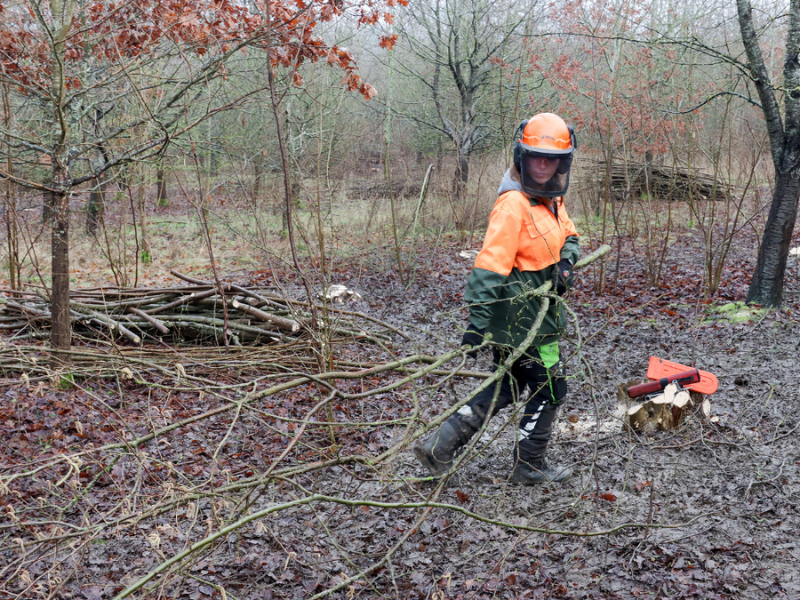
Pruning is an important thinning technique used in woodland management. Pruning involves selective cutting of branches on trees and shrubs of any size using tools such as secateurs, loppers, and chainsaws, depending on the branch diameter. The pruning of larger branches can also be known as lopping. The cuts are precise and considered, only removing what is necessary, using the right method to ensure the bark does not tear or leave large wounds that would be difficult to heal.
Pruning can be done for various reasons including, but not limited to, improving the health of a tree, to alter the size and shape of a tree, to promote growth and improve the quality of its flowers or fruit (e.g., in our orchards), and to remove dangerous limbs in areas of high confluence such as footpaths and roads.
Types of pruning:
Formative pruning is the removal of branches on young trees (e.g. dead branches or structural defects that could cause problems later) to promote growth on the remaining branches and reshape the tree into a desired form. This can improve tree health, structure, and fruit yield.
Crown lifting removes the lower branches, increasing clearance from the ground which reduces weight on the canopy branches, increases light transmission, and improves access around the tree.
Crown thinning is the balanced removal of small branches throughout the canopy which allows more air to circulate and light to pass through the branches, without altering the shape of the tree.
Crown reduction is the removal of the outer portions of a tree (foliage-bearing branches) to reduce the height or spread of the crown. This can make the tree better suited to its environment by reducing wind loading.
Mobile Elevated Work Platform (MEWP) pruning
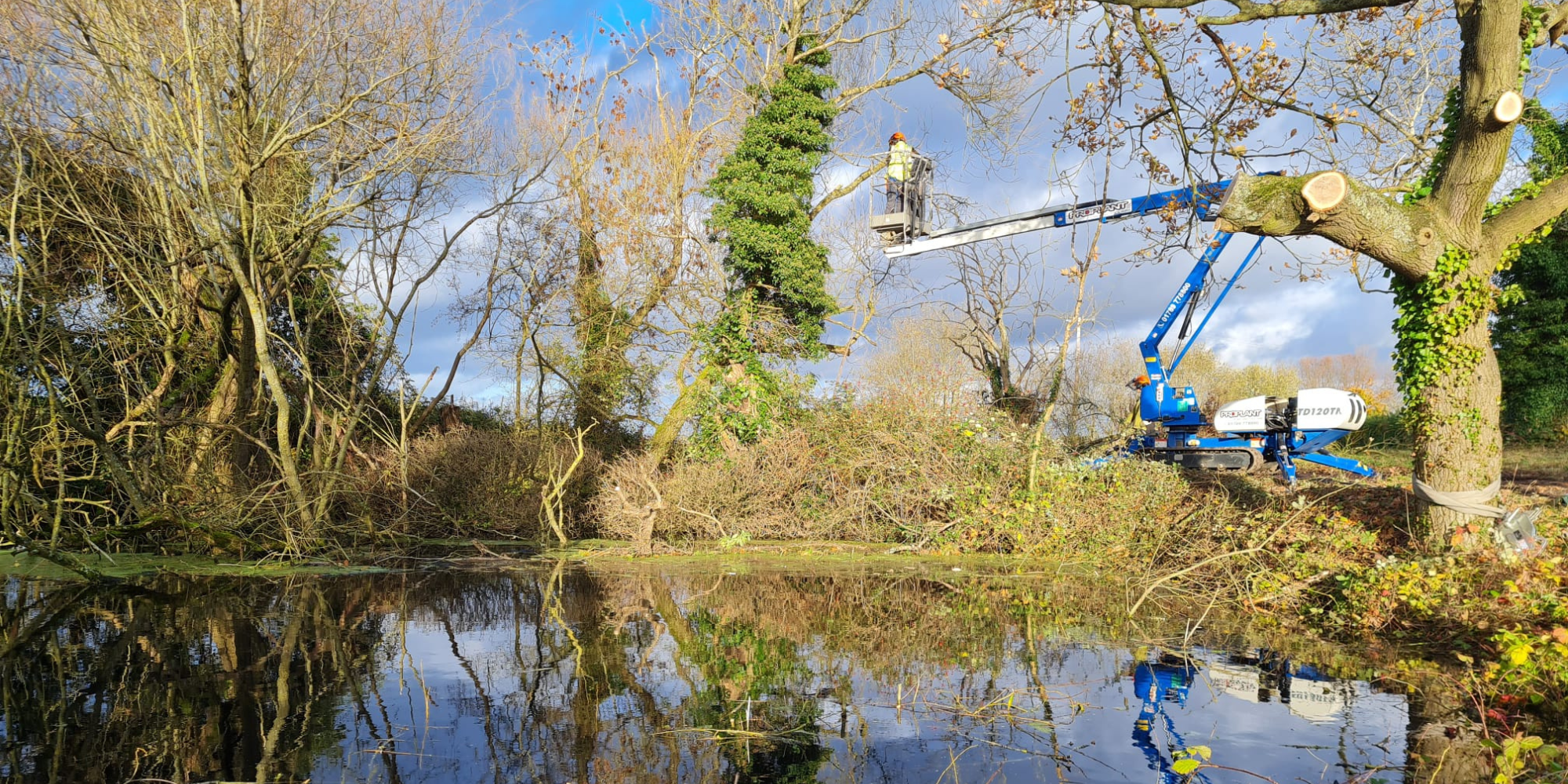
In November, our Forest Rangers carried out tree management work from a MEWP (Mobile Elevated Work Platform). MEWP's allow us to safely carry out pruning work at height on trees that we would otherwise not be able to access. At Sheriff’s Lench, the team worked on a large ash tree with dieback to reduce its crown of dead and diseased branches that were at risk of falling onto a vehicle track. The work followed an assessment which identified valuable habitat features for roosting bats, so a bat survey was carried out to confirm that no bats were present in the tree prior to works commencing. The forestry team worked closely with the biodiversity team to retain important deadwood habitat features, only removing branches considered hazardous.
With biodiversity in mind, the team also worked on improving the pond at Sheriff’s Lench – cutting back overbearing branches of willow and oak trees that were shading out the pond, helping to increase light and reduce leaf fall into the water, improving the habitat. Finally, in Dorsington, the canopy of a large willow tree overhanging a well-used footpath was pruned, removing dead branches and reducing overhanging growth to improve safety and stability.
Glade clearing and scalloping
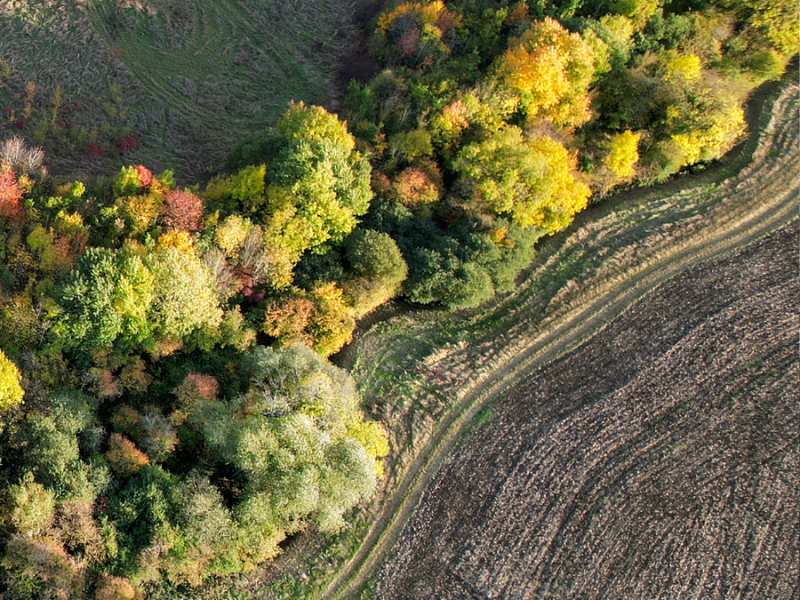
The forestry team works hard to retain the open spaces within our woodlands. Glades provide valuable grassland and wildflower habitats within woodlands but can quickly become overgrown if not managed. The team are currently cutting back thorn and scrub regeneration, such as blackthorn, dogwood, dog rose, and bramble, which have started to grow in our glades, to prevent them taking over and shading out the ground flora. This work will help make the glades easier to maintain next year when we will be able to mow the areas after the summer and clear the cuttings to improve floral diversity.
The team are also creating scallops (semi-circle or D-shaped areas along woodland edges) to create a more natural, diverse edge that transitions into rides, footpaths, and large open spaces. The fall of the sunlight onto the edges create vital habitats for invertebrates like butterflies.
Forest infrastructure
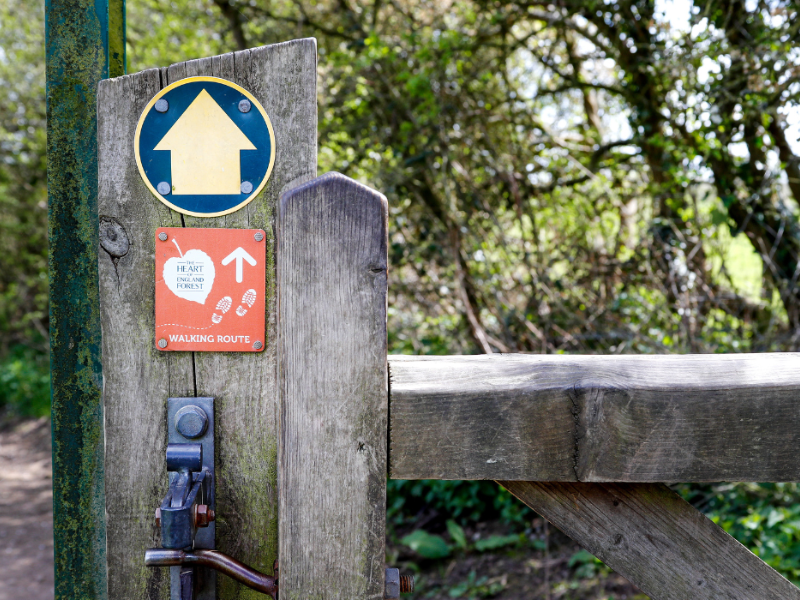
The team has repaired old and damaged fencing across our trail network, including the Dorsington bridleway, and around the deer-fenced compartments at Sheriff’s Lench. They have also repaired and installed gates, including new access points such as the entrance to the Plant-a-Tree dedication area at Eddie’s Wood. In addition, old footbridges have been repaired around Dorsington, and new bridges are being constructed in Honeybourne to maintain important access routes.
Hedge cutting
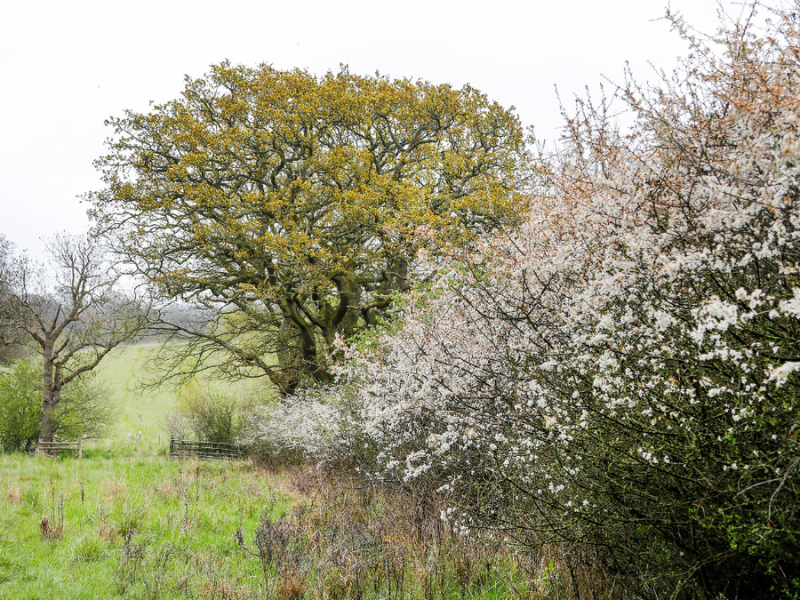
Outside the main bird nesting season, the team is cutting back overgrown hedges along the permissive trail network to maintain good access for walkers. Care is still taken to check for any wildlife present in the hedgerows before work begins.
Orchards
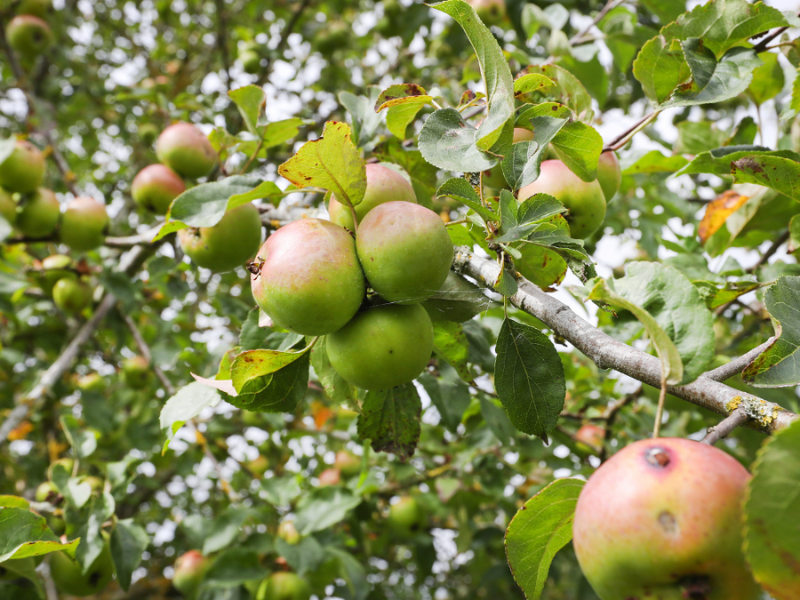
This winter, the team is planning to begin managing some of our older orchards. This will involve pruning trees to remove damaged limbs, clearing overgrown areas, and improving access. The long-term aim is to manage the orchards as both valuable wildlife habitat and for fruit production.
How this work benefits our visitors
Our objective at the Heart of England Forest is to create and conserve a huge broadleaf forest for the benefit of the environment, wildlife, and people, here to enjoy now, and in perpetuity. It is important to us that our visitors enjoy the Forest, and thanks to our incredible forestry team, this can be done safely.