Behind the scenes: Grafting for heritage
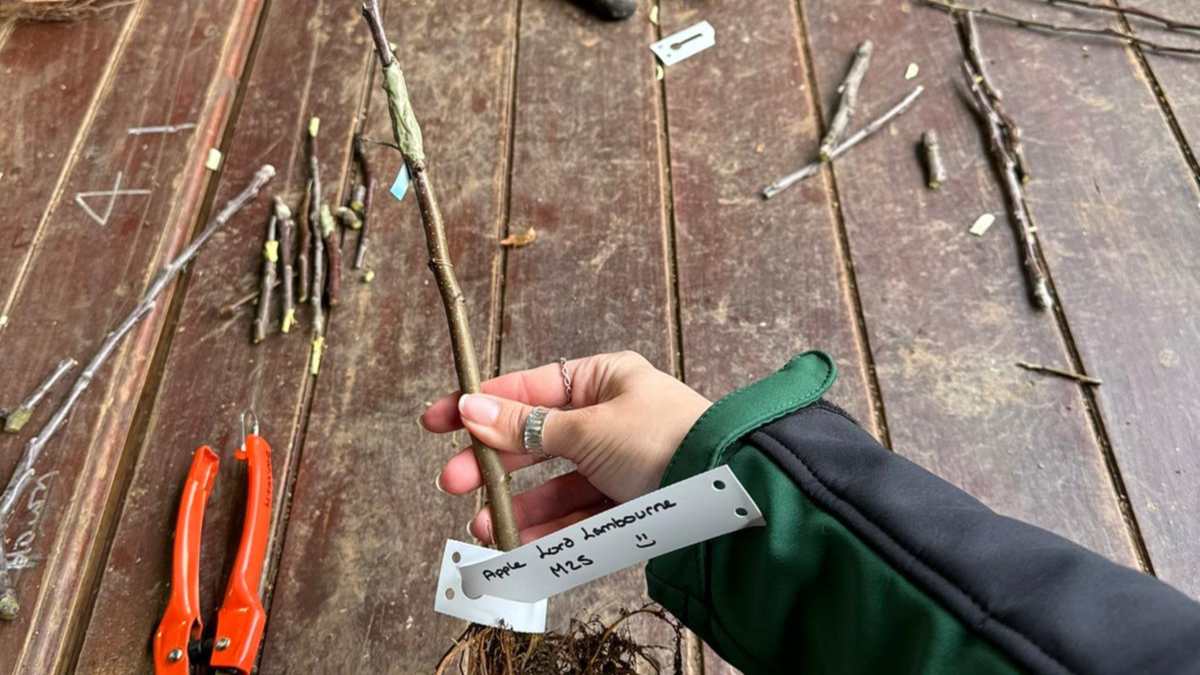
Tony Strickland from the Vale Heritage Landscape Trust kindly volunteered his time in early March to impart his expertise on grafting fruit trees to our staff and volunteers. This technique is important for preserving traditional fruit tree varieties and is a practice we hope to continue in the orchards in the Forest.
What is grafting?
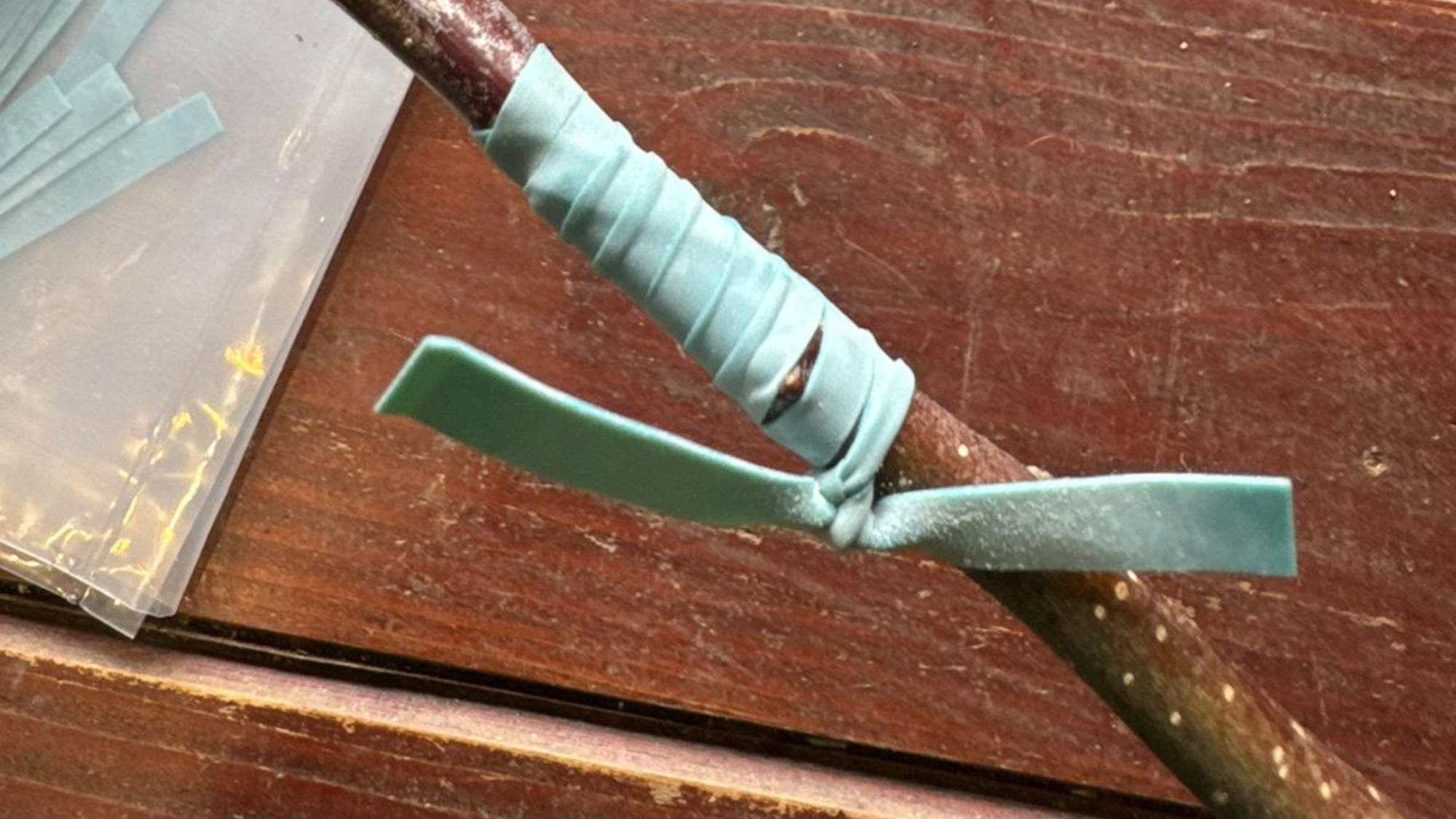
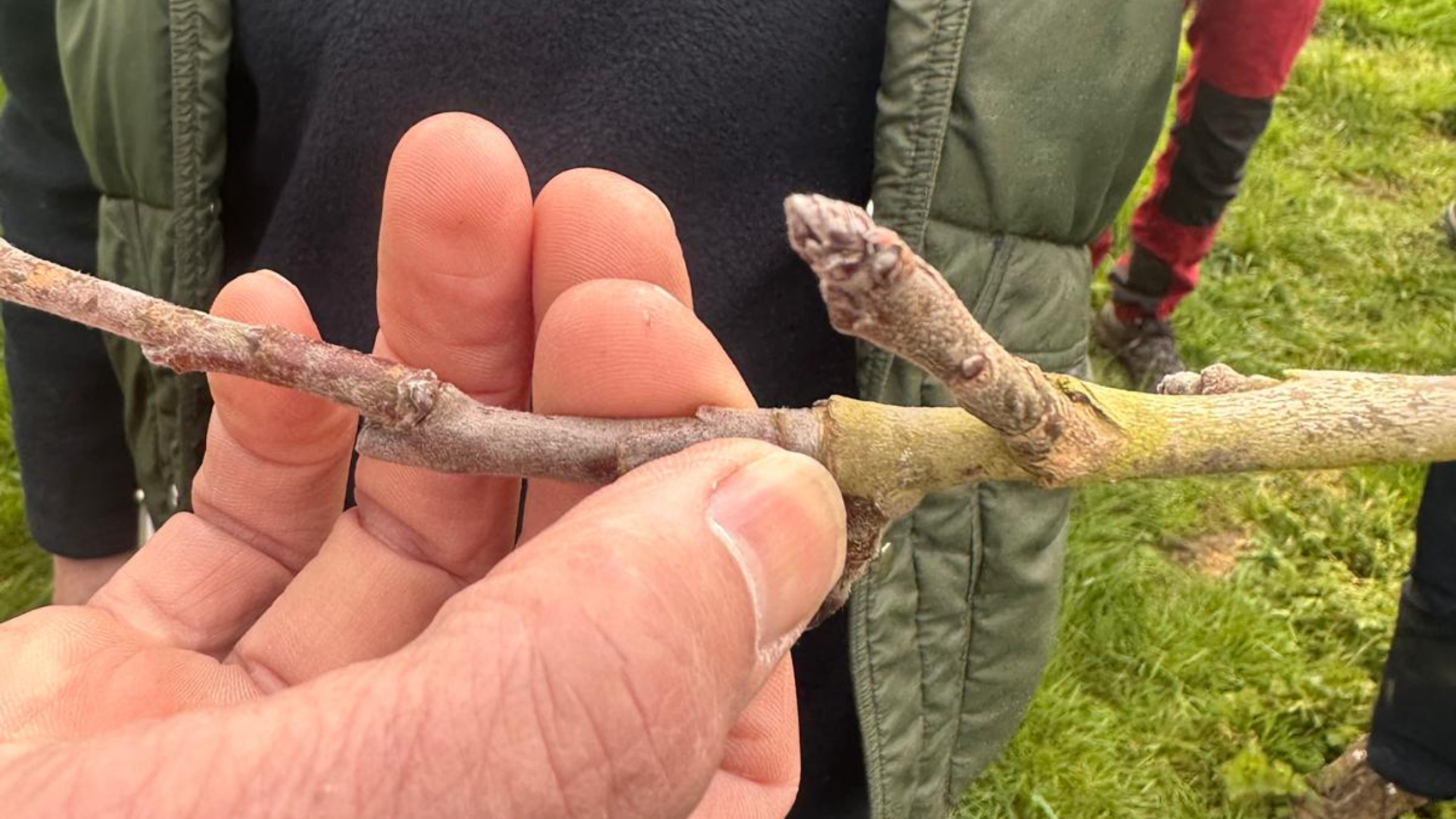
Grafting is a method of propagation where a cutting from one plant (known as the scion) is attached to the rootstock or stem of another plant. The two plants fuse and form a single plant. There are different methods of grafting. Tony taught and demonstrated the bench grafting method.
Why do we use grafting in orchards?
- It’s the only way of replicating apple and pear varieties, as growing them from seed would produce a new variety.
- To preserve traditional heritage fruits that are at risk of extinction
- It can help repair damaged fruit trees.
A successful graft depends on the compatibility of the two plants and favourable environmental conditions.
How many were grafted?
A total of 25 trees were grafted during the session using scions from our veteran apple trees, in the hope that we can grow these on to replace losses in our traditional orchards.

The benefits of healthy, diverse orchards in the Forest
Overall, we have 15 orchards. As well as the usual apple, pear, and stone fruit species, we plant traditional fruits like quince and medlar. An increased variety of trees supports a greater range of species. They will all flower and fruit at slightly different times. This means a continued supply of food for pollinators and other species, including us!
We aim to plant a range of local varieties to add to the heritage and biodiversity value, and by grafting, we will conserve old varieties that are no longer commercially grown.
How to get involved
Don’t just read about our orchards, be part of their future. Join us as a volunteer and get hands-on experience restoring and caring for these incredible habitats. We hope to enhance this habitat for an increasing variety of species, including the red listed metallic green noble chafer beetle and the sweet-smelling orchard tooth fungus, which are reliant on the dead wood of fruit trees.